I have seen Downton Abbey before. All of it. I enjoyed it enough to return, and now, on my second viewing, I have reached the second episode of Season 2.
This time I am noticing something different.
The language.
There is something wonderful about the way these people speak. They do not always say what they mean. Sometimes they say precisely the opposite. Their insults are elegant. Their affection is guarded. A simple observation can carry the weight of an entire argument.
And the words are beautiful.
I find myself listening more carefully than I did the first time. Sometimes the conversation interests me more than the story. I know what will happen to these people. I have seen their joys and disappointments before. There is no mystery left in that.
But the language still surprises me.
What Happened to the Way We Speak?
I wonder what happened to the way we speak.
We have become very good at communicating quickly. We have shortened our sentences and reduced our thoughts to messages. We speak in fragments. We interrupt. We use the same tired expressions until they no longer mean anything.
Perhaps it was always this way. Perhaps people a hundred years ago spoke just as carelessly, and what I am hearing is simply the work of talented writers.
I suspect there is some truth to that.
There was also a great deal wrong with the world depicted in Downton Abbey. Its manners concealed prejudice, cruelty, and the rigid divisions of class. I would not wish to live in that society.
But I would like to borrow something from its language.
The patience to construct a sentence. The pleasure of finding the right word. The ability to disagree without raising one’s voice. The understanding that one can express a great deal without saying everything.
Beautiful Language Does Not Belong to the Past
I don’t think we have lost the ability to speak beautifully. I think we have lost some of our interest in doing so.
We are in a hurry. Even when we have nowhere to go.
Perhaps that is why I have returned to this old television series. Not merely for the story or the characters, but for the pleasure of hearing people take their words seriously.
There is a strange comfort in listening to a conversation that does not seem eager to end.
I am not suggesting that we should all begin speaking like English aristocrats. That would be absurd. Beautiful language does not require an accent or an elaborate vocabulary. Some of the finest things ever said were said plainly.
But there is a difference between simplicity and carelessness.
And I think that difference matters.
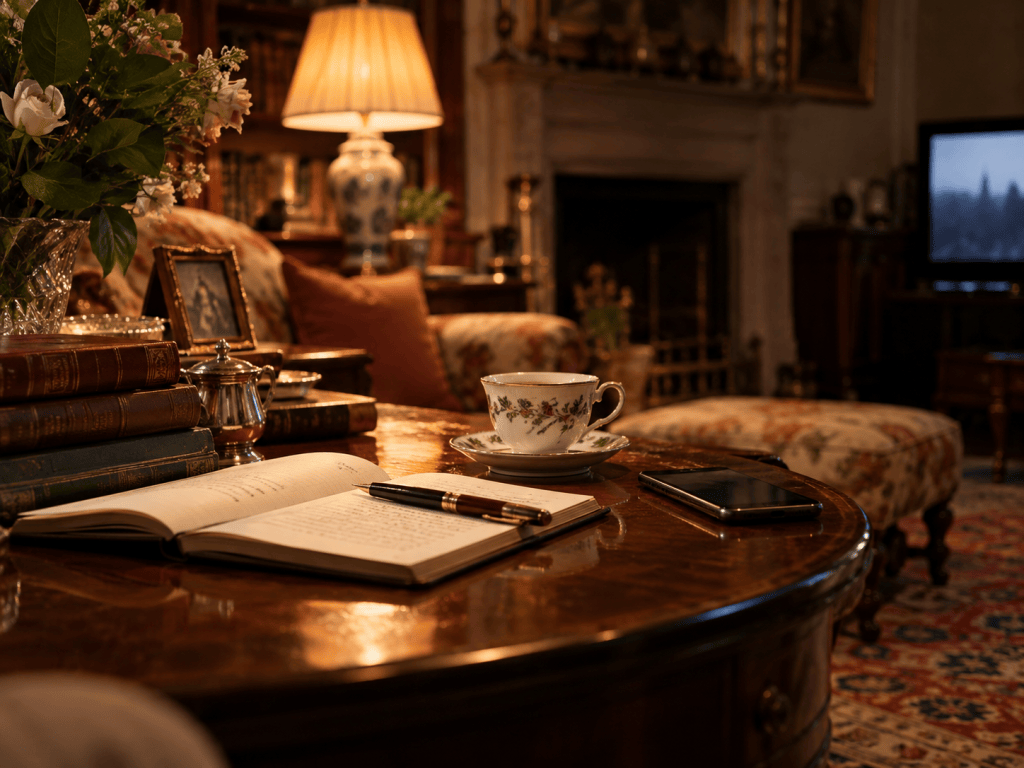
The episode ends. I turn off the television. The room is quiet.
I pick up my phone. There are messages waiting.
I begin to type a reply.
Then I delete it and try again.


Leave a Reply