

So I have just found out that Glen Hansard died yesterday, and grief does something strange to time even when the person who has died was someone you never met, someone who did not know that, in some unremarkable room in some difficult year of your life, you were listening to his voice as though it were a rope lowered through the dark, and that you held on to it without ever thinking to ask who was holding the other end, and only the other day, absurdly, almost offensively recently, I was listening to his new live album, listening to that voice still climbing out of him with all its old weather in it, all that gravel and tenderness, that sense that a song was not being performed so much as survived in front of you, and at no point did I understand that I was listening to a life that had already nearly reached its edge, that somewhere, unseen by me, the last page was turning while the music went on pretending, as music always does, that there would be another night, another stage, another breath drawn close to the microphone.
There are deaths that arrive as information, as names carried past us in the current of the day, and then there are deaths that seem to enter through some hidden door in the body, bypassing thought entirely, because the person who has gone had long ago become tangled in a former version of ourselves, and so when we hear that they are dead we do not grieve only for them but for the vanished rooms in which we listened to them, for the streets along which their songs followed us, for the beds where we lay awake with a voice in our headphones saying the thing we could not say, for the private catastrophes that nobody else saw and that the music, without knowing us, nevertheless witnessed, and suddenly all those discarded selves return at once, the self who was lonely, the self who was in love, the self who was leaving or being left, the self who still believed that suffering, if felt deeply enough, might reveal some secret architecture beneath the ordinary world, and they stand around us like people arriving silently for a funeral, each carrying a different song.
He got me through a whole period of my life, though even that phrase, got me through, sounds too simple, too clean, as if there had been a road with a beginning and an end, as if I had crossed it bravely and emerged unchanged except for having reached the other side, when really there were months or years in which I did not know I was going anywhere, in which I was merely continuing, badly and quietly, while his music kept returning to tell me that a broken voice was still a voice, that tenderness did not become worthless merely because it had failed to save anything, that one could stand in the wreckage of love or hope or one’s own illusions and sing without pretending the wreckage was a cathedral, although sometimes, for the length of the song, it became one.
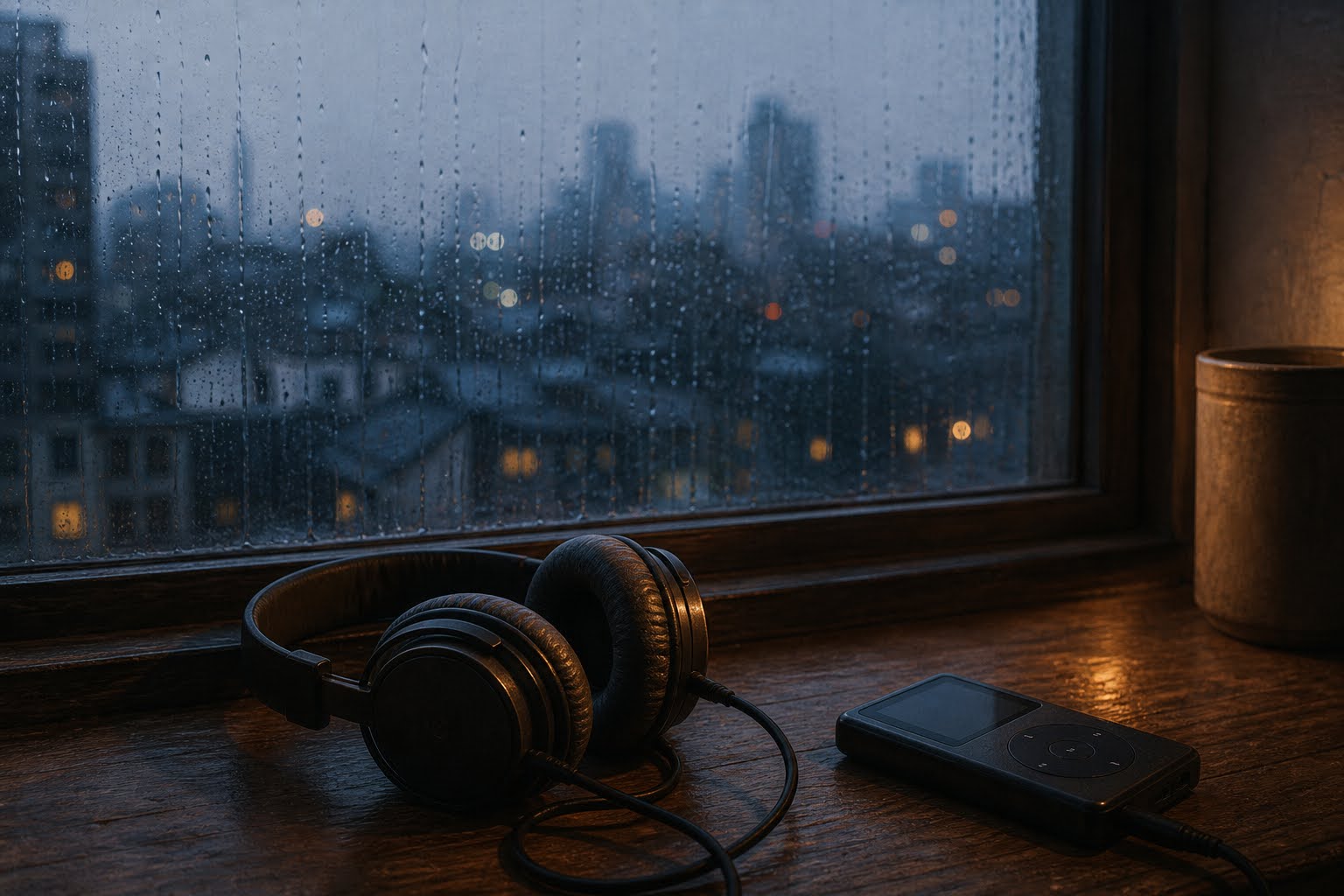
And this is the peculiar cruelty of losing an artist, the voice remains so completely alive that the fact of the body’s disappearance feels impossible, almost vulgar, because you can press a button and there he is again, inhaling before the first line, laughing somewhere between songs, striking a string and setting the air trembling exactly as it trembled before you knew, and for a few seconds knowledge loosens its grip and you inhabit the old world again, the world of two days ago, when Glen Hansard was alive somewhere whether or not you were thinking of him, but then the song ends, applause rises from a crowd that does not yet know it has become an archive, and the silence afterward is no longer the ordinary silence between tracks but a silence that seems to have learned his name.
I keep thinking about how casually I listened the other day, how I allowed the music to accompany whatever small thing I was doing, how I assumed, with the monstrous innocence with which we assume almost everything, that there would be more, more records, more live versions, more evenings in which that voice would tear itself open and somehow call the tearing joy, and perhaps this is what death exposes most mercilessly, not only that a person can vanish, but that until the moment they vanish we have been living inside the miracle of their continued existence without recognizing it as a miracle, spending it freely, postponing our gratitude, treating the living voice as though it belonged to the limitless supply of the world.
I don’t know what to say, because everything large enough sounds false and everything true sounds painfully small, and maybe all I really have is this: there was a time in my life when I needed a voice like his, and his was there; there were feelings I could not carry alone, and for a while a man with a battered guitar carried one end of them without ever knowing my name; there were nights when the world seemed sealed against me, and then a song opened a narrow window, not wide enough to escape through, perhaps, but wide enough to breathe.
And now he is gone, and the songs are not, and I cannot decide whether that is consolation or another form of heartbreak.
So thank you, Glen.
And fuck.
And goodbye.


Leave a comment